
Table of Contents
- Introduction to Converting Logos into Appliqué Digitized Files
- What Is Appliqué Digitizing?
- Why Convert Logos into Appliqué Digitized Files?
- Preparing Your Logo for Appliqué Conversion
- Step-by-Step Process of Converting Logos into Appliqué Files
- Best Software for Appliqué Digitizing
- Common Mistakes and How to Avoid Them
- Benefits of Professional Digitizing Services
- Expert Tips for Perfect Appliqué Embroidery
- Conclusion and Call to Action
Introduction to Converting Logos into Appliqué Digitized Files
Convert logo to appliqué digitized file is an essential process that helps transform ordinary logo designs into stunning embroidery-ready artwork. This conversion allows you to produce creative, textured embroidery using appliqué techniques that combine fabric and thread for beautiful results.
Whether you are a designer, business owner, or embroidery professional, knowing how to convert logo to appliqué digitized file ensures high-quality designs with perfect fabric layering and minimal thread use. Professional services like Quality Digitizing make this process simple and efficient.
What Is Appliqué Digitizing?
Appliqué digitizing is a specialized embroidery process where fabric pieces are stitched onto a base material, forming parts of the design. When you convert logo to appliqué digitized file, you prepare it for embroidery machines to recognize fabric placement, trimming lines, and stitching paths.
This embroidery method has been popular for decades, and you can read more about its origins and creative use on Wikipedia’s Appliqué article. This external resource provides detailed insight into how appliqué evolved as both an art and embroidery technique.
Why Convert Logos into Appliqué Digitized Files?
Choosing to convert logo to appliqué digitized file gives your brand a unique advantage. Unlike standard embroidery, appliqué adds dimension, texture, and color contrast that enhances visibility and durability.
- Cost efficiency: Saves time and thread during embroidery.
- Premium appearance: Adds a layered, high-end finish to logos.
- Long-lasting results: Stronger stitch structure improves durability.
- Design flexibility: Combine fabrics, textures, and stitches creatively.
To ensure the best quality, it’s recommended to have professionals at Quality Digitizing handle your appliqué logo conversions for flawless output.
Preparing Your Logo for Appliqué Conversion
Before you convert logo to appliqué digitized file, preparation is key. Clean, simplified designs make the digitizing process smoother and produce cleaner stitch results.
Preparation Tips
- Ensure the logo is in high resolution (minimum 300 DPI).
- Simplify fine details and avoid overly thin lines.
- Use solid color fills for easier fabric cutting.
- Save your design in vector or high-quality PNG format.
Step-by-Step Process of Converting Logos into Appliqué Files
Here’s how professionals convert logo to appliqué digitized file efficiently and accurately:
1. Import and Set Up
The logo is imported into embroidery software. Layers are adjusted to define appliqué fabric areas and stitch outlines.
2. Define Placement Stitches
These stitches mark where each piece of fabric will be placed before sewing. It’s the foundation of appliqué digitizing.
3. Secure Fabric with Tack Down Stitches
Once the fabric is placed, a tack-down stitch holds it securely. This ensures precision and prevents shifting.
4. Add Cover Stitches
A satin or zigzag border is added to seal the fabric edges and give a clean, professional appearance.
5. Final Testing
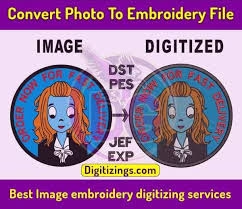
After simulation, the file is exported in machine formats such as DST, PES, or JEF — completing the convert logo to appliqué digitized file process.
Best Software for Appliqué Digitizing
To successfully convert logo to appliqué digitized file, professionals use top-tier software like Wilcom, Hatch, Pulse, and Embrilliance. These programs provide advanced tools for stitch direction, density, and layering, ensuring precise results.
However, mastering these programs takes time and skill. Businesses rely on Quality Digitizing to produce machine-ready appliqué files with expert precision and consistency.
Common Mistakes and How to Avoid Them
When you convert logo to appliqué digitized file, even minor errors can impact embroidery quality. Common mistakes include:
- Using low-quality or pixelated logos.
- Incorrect stitch density for the chosen fabric.
- Skipping underlay stitches.
- Improper alignment between appliqué layers.
Benefits of Professional Digitizing Services
Hiring professionals to convert logo to appliqué digitized file ensures:
- High-precision embroidery files.
- Optimized stitch paths and minimal thread breakage.
- Compatibility with all major embroidery machines.
- Quick delivery and guaranteed quality.
Quality Digitizing provides top-notch appliqué digitizing services for businesses, apparel brands, and custom embroidery shops worldwide.
Expert Tips for Perfect Appliqué Embroidery
- Use stable fabrics to prevent distortion.
- Trim excess fabric before cover stitching.
- Test your convert logo to appliqué digitized file design before bulk production.
- Match thread and appliqué fabric colors for seamless results.
Conclusion and Call to Action
Learning how to convert logo to appliqué digitized file empowers designers and businesses to create textured, durable, and professional embroidery logos. From preparation to testing, every step ensures long-lasting quality and brand appeal.
If you want flawless appliqué embroidery, trust the experts at Quality Digitizing to convert logo to appliqué digitized file with precision and speed. Get your custom designs digitized today and experience premium-quality results!