
Table of Contents
- Introduction
- What is Logo Digitizing?
- Common Mistakes in Logo Digitizing
- How to Avoid These Mistakes
- Why Choose Professional Digitizing Services
- Recommended Tools & Learning Resources
- Conclusion
Introduction
Logo digitizing is an essential step in transforming a brand’s visual identity into a professional embroidery file. However, many designers and beginners make common mistakes that affect the final quality of their embroidery work. Understanding these common mistakes in logo digitizing and learning how to fix them can help you achieve sharp, clean, and high-quality embroidery results. If you want expert guidance, you can always rely on Quality Digitizing for professional logo digitizing services that guarantee precision and detail.
What is Logo Digitizing?
Logo digitizing is the process of converting a standard image or logo into an embroidery file format that embroidery machines can read. This process ensures that each stitch is placed accurately to replicate the design on fabric. The quality of your embroidery depends heavily on the digitizing process — making it crucial to avoid errors that can distort the design, change its shape, or affect color consistency.
Common Mistakes in Logo Digitizing
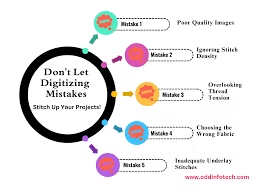
1. Ignoring Stitch Density
One of the most frequent common mistakes in logo digitizing is incorrect stitch density. If stitches are too dense, the fabric may pucker or tear. If they are too loose, the embroidery may look incomplete. Proper density depends on fabric type, thread thickness, and design complexity.
2. Poor Underlay Usage
Underlay stitching forms the foundation for your embroidery design. Without it, the top stitches won’t have enough stability, leading to uneven or distorted designs. Always apply appropriate underlay types such as edge runs, zig-zags, or fill underlays based on the logo structure.
3. Overlooking Fabric Type
Not all fabrics respond to stitching in the same way. For instance, stretchy materials require different tension and stabilizers compared to thick canvas. Ignoring fabric type leads to uneven embroidery and poor durability.
4. Ignoring Thread Direction
Thread direction determines how light reflects off the embroidery, impacting its final appearance. Incorrect direction can make certain parts of a logo appear darker or flatter than intended. Skilled digitizers always plan stitch angles carefully for a professional finish.
5. Using Low-Quality Artwork
Digitizing a low-resolution logo results in poor-quality embroidery. The cleaner your source artwork, the better your final embroidery. Always use vector files or high-resolution images for optimal results.
6. Not Adjusting for Scale
Scaling designs without adjusting stitch density or type is another frequent mistake. A logo designed for a large jacket back won’t look the same when shrunk for a cap or chest. Adjust stitch types, underlay, and density accordingly for different sizes.
7. Skipping Test Runs
Running a test stitch-out before production helps identify errors before mass production. Skipping this step can result in wasted materials and time if the logo doesn’t stitch properly on the first attempt.
How to Avoid These Mistakes
To avoid common mistakes in logo digitizing, consider the following best practices:
- Always analyze the fabric before starting the digitizing process.
- Use appropriate underlay stitching for added design stability.
- Maintain proper stitch density according to material and logo size.
- Plan thread directions strategically for smooth texture and shine.
- Perform regular test runs before large-scale embroidery production.
Implementing these techniques ensures your embroidered logo looks sharp, balanced, and durable.
Why Choose Professional Digitizing Services
If you struggle with digitizing software or want to ensure perfection, professional digitizing services are the best option. Experts from Quality Digitizing provide accurate, machine-ready embroidery files customized to your fabric type and logo style. Their experienced team helps you save time and materials while ensuring the best possible stitch quality for any logo size or application.
Recommended Tools & Learning Resources
Embroidery digitizing requires the right tools and continuous learning. If you want to understand embroidery fundamentals, you can visit this detailed embroidery guide on Wikipedia. Using professional software like Wilcom, Hatch, or Brother PE-Design can enhance your results when combined with expert guidance.
Conclusion
Logo digitizing is both an art and a science. By avoiding the common mistakes in logo digitizing mentioned above, you can ensure your designs look clean, professional, and durable on every fabric. Remember, expert help can save hours of trial and error — that’s where Quality Digitizing stands out. Their professional embroidery digitizing solutions are designed to give you flawless results every time.